
Health and safety in care homes: staff training, checks and documents, with their dates
SafetyPro360 keeps the staff side of a care home's safety records: who has done which training, what was checked and when, and accidents to staff. It is not a care-planning system and holds nothing about residents.
14 days free, then from £9.99 a month, with no card needed to start.
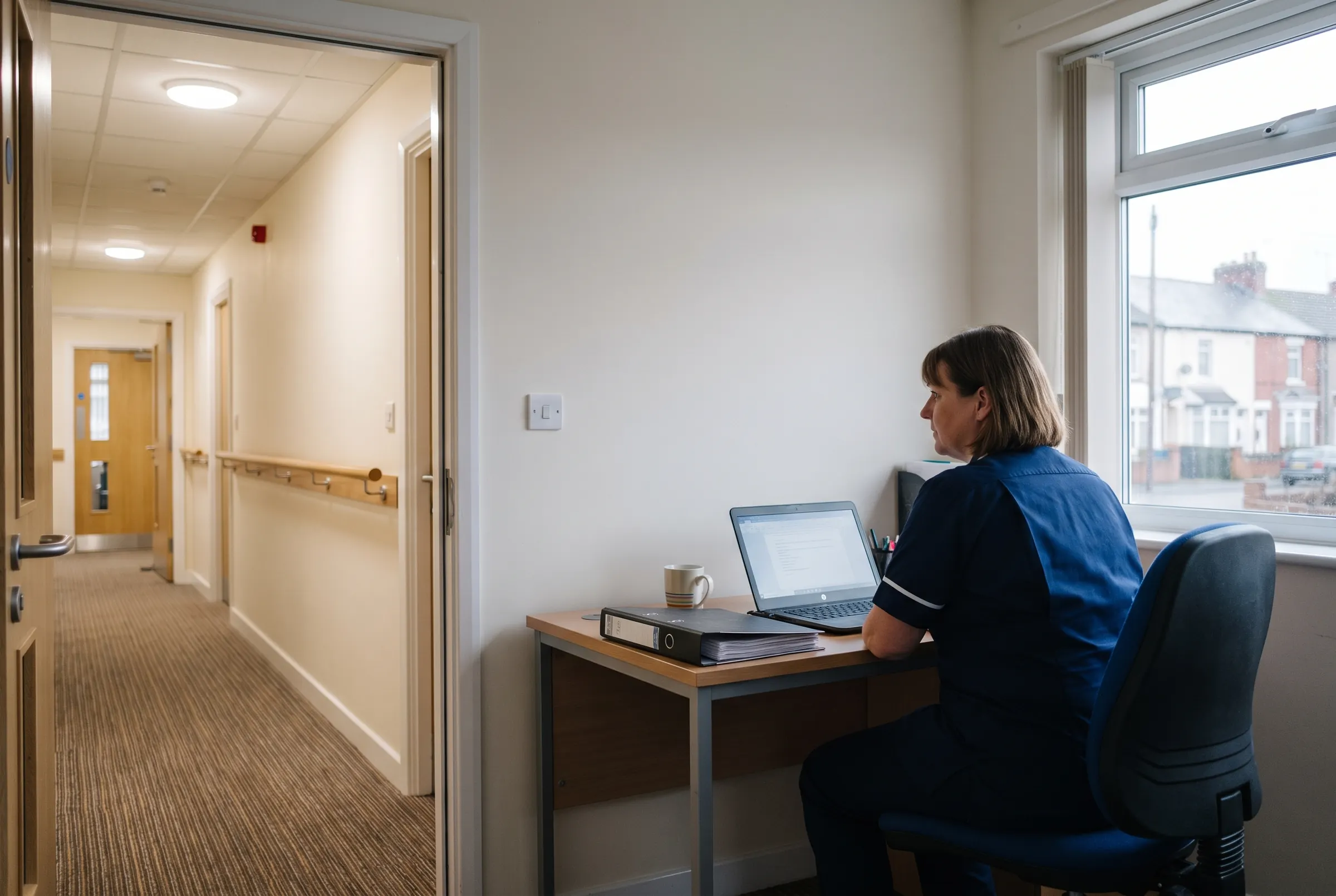
“Can I see the training records for the staff on shift today?”
A CQC inspector, or the council that commissions places with you
CQC's guidance says training should be monitored, with action taken quickly when requirements are not being met. The inspector is checking that you know where your gaps are.
What a small care home gets asked, and what is law
The law. In England, regulation 18 of the Health and Social Care Act 2008 (Regulated Activities) Regulations 2014 says staff must receive the support, training, supervision and appraisal necessary for the duties they are employed to perform. It names no courses. Fire law adds that employees must have adequate safety training when first employed, repeated periodically where appropriate.
The regulator. CQC does not publish a fixed list either. Its guidance refers to statutory training and "other mandatory training, as defined by the provider for their role", and says all staff must be trained in how to interact with people with a learning disability and autistic people, at a level appropriate to their role.
The expectation. A common starting point is Skills for Care's statutory and mandatory training guide: health and safety awareness, fire safety, moving and handling objects, infection prevention and control, adult safeguarding, basic life support and first aid, and, where the role involves them, assisting and moving people, food hygiene and medication administration. Its refresher periods are recommendations.
What the law requires by way of training, and what is only expected
Set the training each role needs, once
Care assistant, senior carer, nurse, cook, housekeeper, maintenance: each role lists its courses, marked mandatory or optional. A cook needs food hygiene. A housekeeper does not need medication administration.
You set how many months each course lasts. Skills for Care recommends a refresher at least every three years for most topics and at least annually for basic life support, so that is 36 and 12 if you follow it. Enter each certificate with its date and the expiry is worked out. Bank and agency staff can be added as temporary and show on the matrix with everyone else.
- Mandatory and optional courses for each role
- Expiry worked out from the course length you set
- Leavers marked as left, with their records kept

See what has lapsed before the inspector does
The first screen after you log in is one list of what needs attention: training that has expired or runs out within 30 days, required training nobody has done, documents past their expiry or review date, documents you should hold and have not uploaded, overdue actions. Open the matrix, filter it by role, and you have the page an inspector asks to see.
It does not email anyone. The list is there each time you log in.

Fire doors, hot water and equipment: checked, dated, kept
Build a checklist for each round the home already does: the fire door check, the fire alarm call point test, emergency lighting, hot water temperatures at baths and showers, window restrictors, first aid boxes. Questions can be yes or no, pass or fail, or a written answer such as a temperature reading. Each completed check is kept with its date, who did it and a score.
Keep the checks about the building and its equipment. Anything about a named resident belongs in your care records.

How a small care home uses each part
- Training matrixEvery carer, nurse, cook and housekeeper against moving and handling, fire safety, basic life support, infection prevention and control, food hygiene and safeguarding. Filter by role before an inspection.
- Training recordsEach certificate with its date, provider and certificate number. Filter to what expires in the next 30 days and book the refreshers before they lapse.
- Inspections and checksFire door checks, call point tests, hot water temperatures and first aid boxes on your own checklists, done on a phone on the round.
- Document registerThe fire risk assessment, the thorough examination reports for hoists and slings (due at least every six months under LOLER), insurance and policies, each with its expiry or review date.
- Incident reportingAccidents and near misses to staff: a back strain during a transfer, a needlestick, a slip in the laundry. Incidents involving residents go in your care records, not here.
- Toolbox talksA short briefing at handover on a new hoist or a change to the fire procedure, with who was on shift and who still needs to hear it.
Questions people ask
What training is mandatory for care home staff?
The law does not list courses. Regulation 18 requires the training necessary for each person's duties, and CQC's guidance leaves mandatory training to be defined by the provider for each role. A common starting point is Skills for Care's statutory and mandatory training guide, which covers fire safety, infection prevention and control, safeguarding, basic life support and more.
How often does care home training need refreshing?
Skills for Care recommends a refresher at least every three years for most core topics, basic life support at least annually, first aid every three years and a practice fire drill at least yearly. These are recommendations, not law. Fire law says only that training is repeated periodically where appropriate, so set a period for each course and record it.
Is SafetyPro360 a CQC compliance or care-planning system?
No. It is not connected to CQC and it holds nothing about residents: no care plans, medication records or resident incidents. It is for the staff and premises side of health and safety: staff training, documents with their dates, checks on the building and equipment, and accidents to staff.
Who regulates health and safety in a care home?
In England, CQC regulates the quality and safety of care, and HSE says CQC will generally deal with most serious safety incidents involving people who use the service. HSE and local authorities deal with the health and safety of workers. In Scotland and Wales the care regulators are the Care Inspectorate and Care Inspectorate Wales.
Do hoists and slings need regular examination?
Yes. HSE says the Lifting Operations and Lifting Equipment Regulations (LOLER) apply where hoists and slings are used by people at work. Equipment used to lift people, and lifting accessories such as slings, must be thoroughly examined at least every six months unless an examination scheme sets another interval. The report can be uploaded with the date the next one is due.
Have the answer ready before anyone asks.
Add your people, the training each role needs and the documents you hold. From then on, what is overdue or missing is on one screen.
14 days free, then from £9.99 a month, with no card needed to start.