
Warehouse health and safety, with the tickets and the checks on record
SafetyPro360 keeps your lift-truck training, pre-shift truck checks and racking inspections dated and named. It is for the day an inspector points at the forklift.
14 days free, then from £9.99 a month, with no card needed to start.
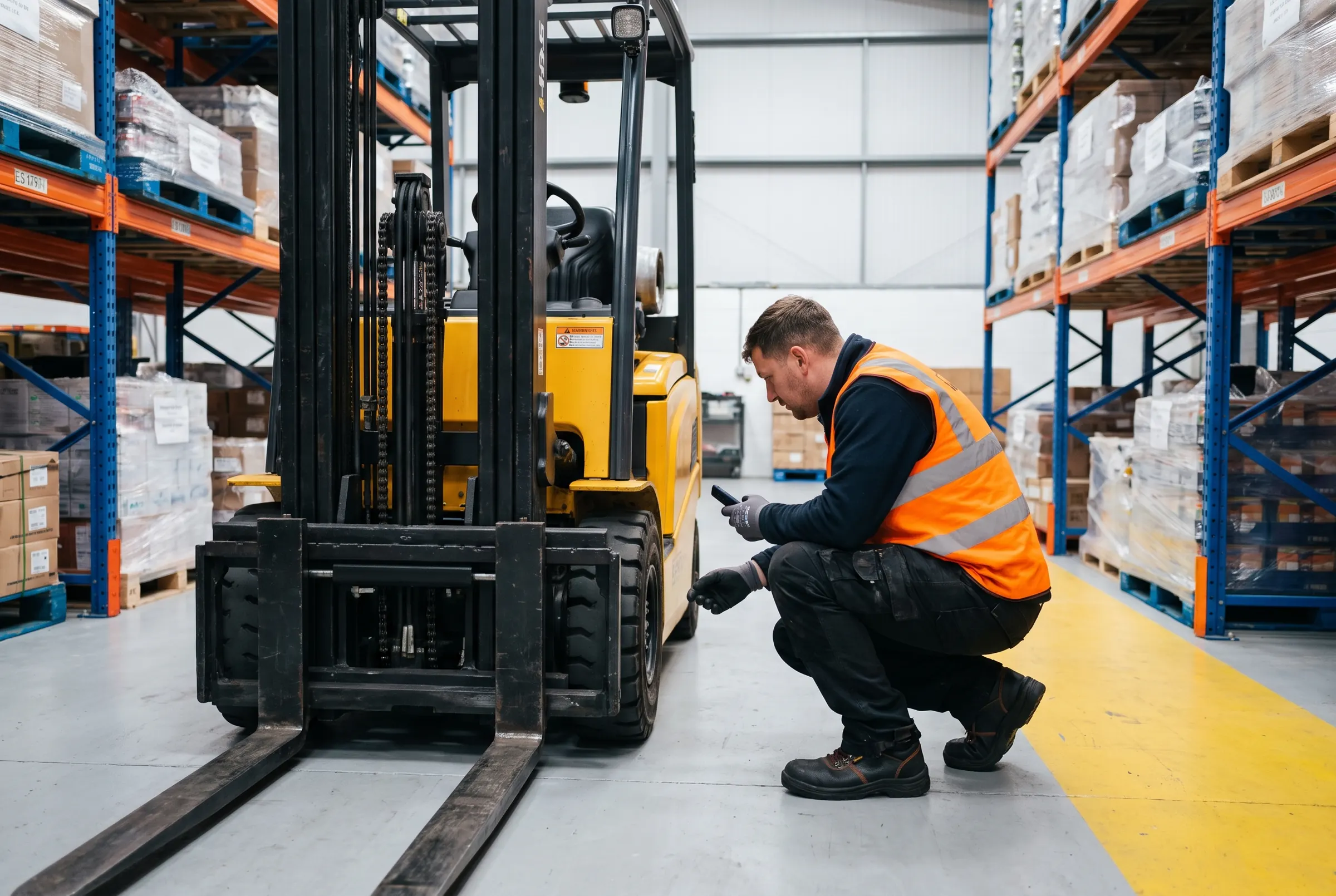
“Who is authorised to drive that truck, and where is this morning's check?”
An inspector, or your insurer after a racking strike
Two questions, asked together, about the same machine. One is answered by a training record and the other by a checklist with today's date on it.
What a small warehouse gets asked, and by whom
Most of it comes from an inspector, and most of what an inspector expects is set out in HSE's warehousing guide, HSG76.
- Lift-truck operators. HSE describes three stages of training: basic, specific job and familiarisation. HSG76 says nobody should operate a truck unless trained, competent and authorised in writing by the employer, for the types of truck they trained on.
- The truck. HSG76 says every truck should be checked at the beginning of each shift and the result documented. Under LOLER the lifting parts must be thoroughly examined at least every 12 months, or every 6 if the truck lifts people, unless an examination scheme sets other intervals.
- The racking. HSG76 recommends visual inspections weekly, or at another regular interval based on risk assessment, with a written record, and an inspection by a technically competent person at least every 12 months.
- Agency staff. HSE's guidance is that day-to-day responsibility for an agency worker's health and safety lies with the business they are working in. That is you.
Lift-truck training and refreshers, by truck type
Set up a course for each type of truck you run: counterbalance, reach, pallet stacker, pedestrian pallet truck. Record each operator's training with the date, the certificate number and the provider. Job-specific and familiarisation training done in house go in the same way.
There is no fixed legal interval for refreshers. HSE suggests considering three to five years, depending on the risks. Enter the number of months you have settled on and each record's expiry date follows. The list filters to valid, expiring in the next 30 days or expired.
- One course per truck type
- Certificate number and provider on each record
- Refreshers due in the next 30 days listed together

The pre-shift truck check, done standing next to the truck
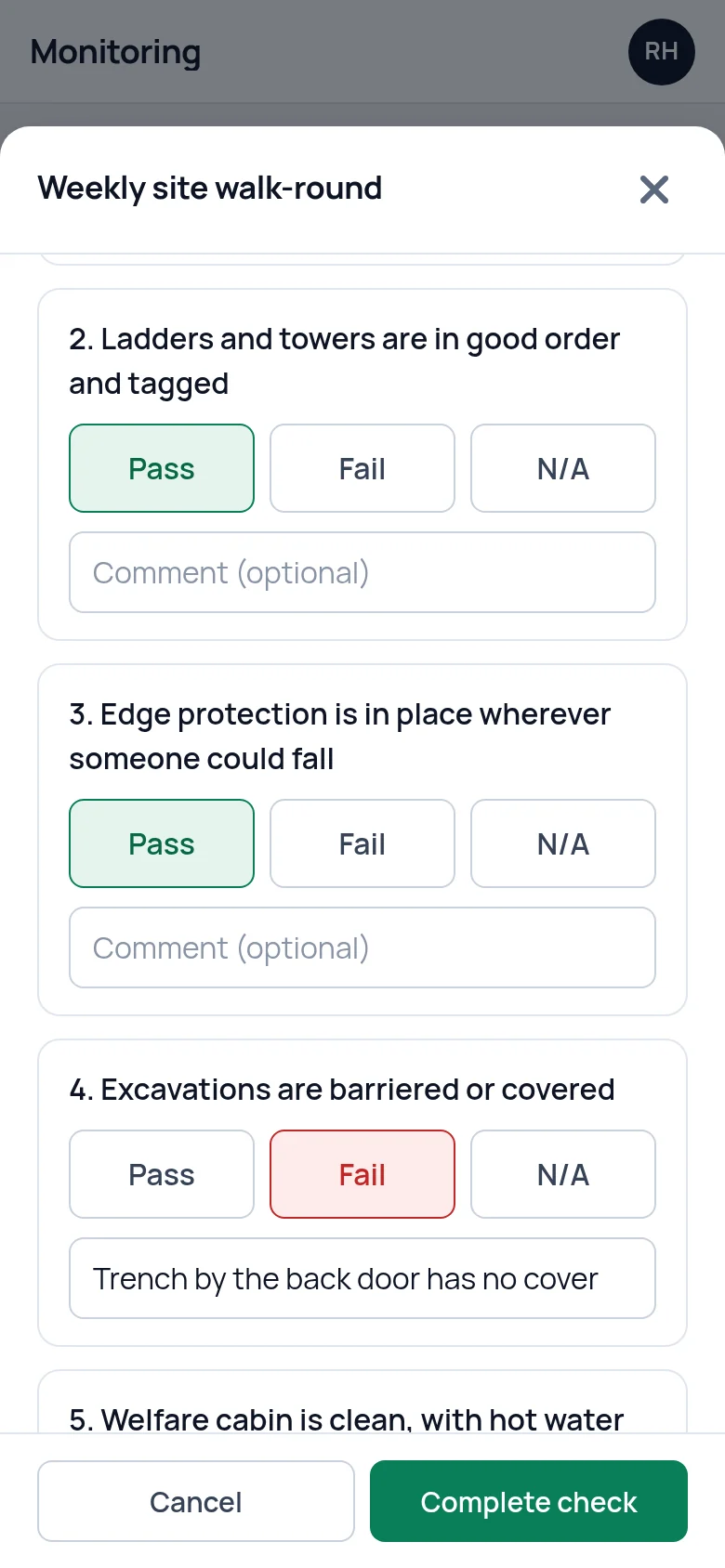
Build the checklist once: tyres and wheel nuts, brakes, horn, lights and mirrors, fluid levels or battery charge, mast, chains and forks, hydraulic leaks, damage. Whoever is logged in opens it on a phone, answers each question pass or fail and comments on anything wrong. A checklist for each truck keeps their histories apart.
Each completed check is kept with its date, who did it and a score. SafetyPro360 does not schedule the check or chase a missed one. It keeps the ones that are done.
Racking strikes and near misses in the aisles
A clipped upright, a pedestrian stepping out between pallets, a load dropped from the second beam: report it on a phone as a near miss or property damage, with the area and exactly where ("Aisle 4, bay 12, front upright"). HSG76 says racking damage should be reported at once to the person responsible for racking safety.
Each report keeps its status until it is closed. Add an action with a name and a due date for the repair, and it shows as overdue if the date passes.

How a small warehouse uses each part
- Training matrixLift-truck training by truck type, manual handling, first aid and fire marshal for every operative. A lapsed refresher shows as expired, and a role's missing training shows as a gap.
- Inspections and checksThe weekly racking walk-round, pre-shift truck checks, dock and fire exit checks: your own questions, answered on a phone, each kept with its date and score.
- Staff and rolesAgency and temporary workers are added with their employment type and start date. Put them in a role and the matrix shows the induction and manual handling training they still need.
- Document registerThorough examination reports for each truck, the yearly racking inspection report, written authorisations to operate and your insurance, each with an expiry or review date.
- Incident reportingRacking strikes, vehicle and pedestrian near misses and manual handling injuries, recorded with the area and the exact bay.
- Toolbox talksTen minutes at shift start on pedestrian routes or a near miss from last week. The outstanding list catches the people on nights who were not there.
Questions people ask
How often do forklift operators need refresher training?
There is no set legal interval. HSE says there is no specific requirement for refresher training after set periods, but that even experienced operators need to be re-assessed from time to time. Its workplace transport guidance suggests considering a gap of three to five years, depending on the risks. Whatever period you choose, write it down and bring it forward after a near miss.
Does a forklift need a daily check?
HSE's warehousing guide HSG76 says every truck should be checked at the beginning of each shift, with the result documented by the operator. Separately, the lifting parts of the truck must be thoroughly examined by a competent person at least every 12 months under LOLER, or every 6 months if it is used to lift people, unless an examination scheme sets other intervals.
How often should pallet racking be inspected?
HSG76 sets out three levels. Damage should be reported as soon as anyone sees it. Visual inspections should be made weekly, or at another regular interval based on risk assessment, with a formal written record. A technically competent person should inspect at intervals of not more than 12 months and give a written report. This is HSE guidance, not a regulation.
Who is responsible for the health and safety of agency workers in a warehouse?
Both the agency and you have duties, but HSE says day-to-day responsibility for health and safety during the assignment lies with the business using the worker, because it directs the work and usually controls the premises. In practice that means your induction and your training record for that person.
Can each operator do the check on their own phone?
Checks are run by someone logged in to your account, and staff do not have logins of their own. In most small warehouses the supervisor or team leader runs the check with the operator at the truck, and the operator's name can go in the notes. The record shows who was logged in.
Have the answer ready before anyone asks.
Add your people, the training each role needs and the documents you hold. From then on, what is overdue or missing is on one screen.
14 days free, then from £9.99 a month, with no card needed to start.