
Health and safety in engineering and fabrication workshops
Welding, grinding and lifting each come with training to prove and a report to keep in date. SafetyPro360 holds both, next to the checks you do on the shop floor.
14 days free, then from £9.99 a month, with no card needed to start.
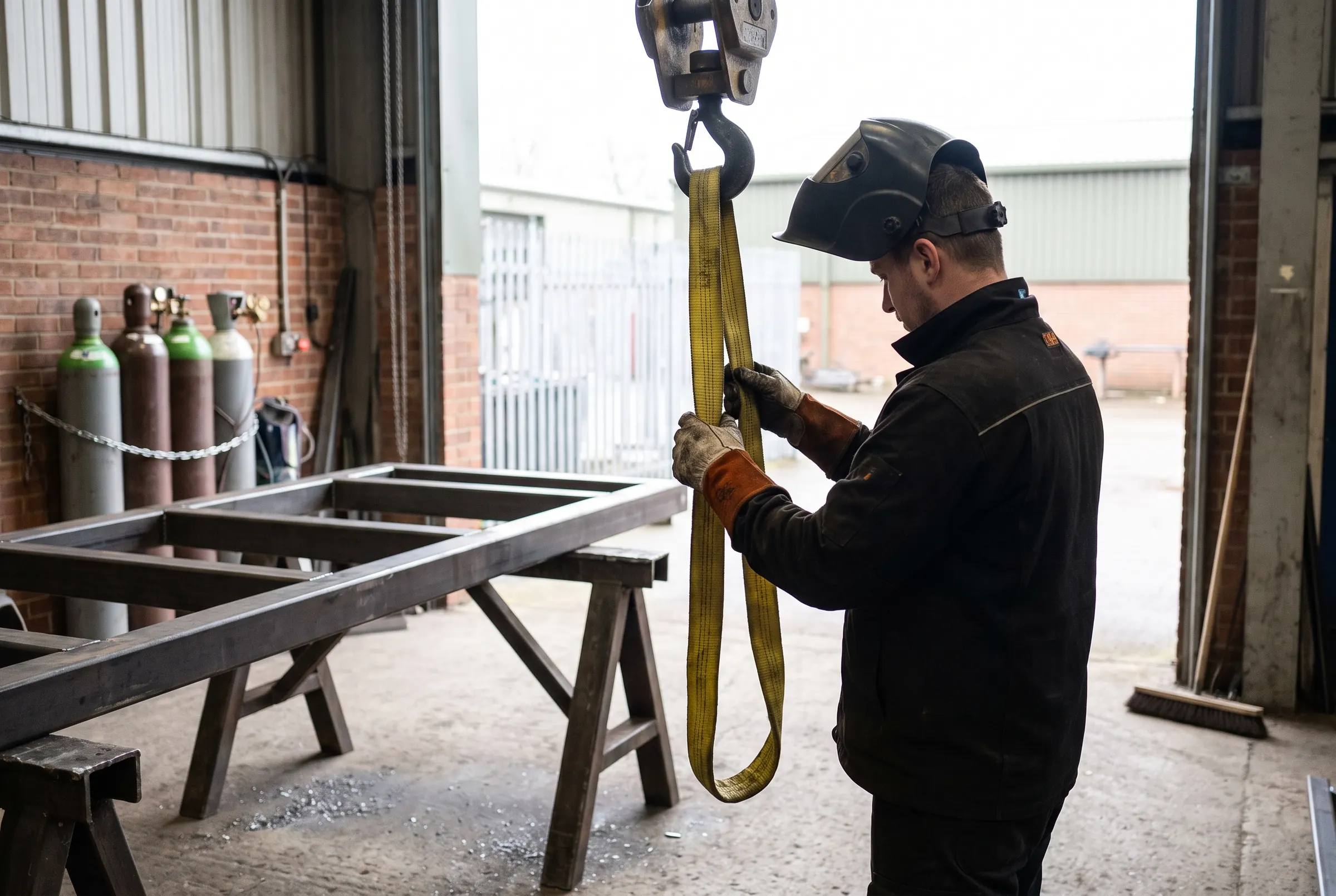
“When was that crane last thoroughly examined, and who is trained to change a grinding wheel?”
An HSE inspector, or a customer auditing your workshop
The examination report has a date on it and a date it runs out. So does the training. Both questions are really asking whether you knew the dates before you were asked.
What a fabrication or engineering shop gets asked
- Lifting equipment. Under LOLER, slings, shackles and other lifting accessories must be thoroughly examined at least every 6 months, and cranes, hoists and other lifting equipment at least every 12, unless an examination scheme sets other intervals. Each report gives the date the next one is due.
- Abrasive wheels. The Abrasive Wheels Regulations 1970 have gone. The duty now sits in PUWER: anyone who uses work equipment must have had adequate training. HSE's guide HSG17 covers what that training should include, down to mounting the wheel.
- Welding fume. Fume from all welding, mild steel included, is classed as carcinogenic, and HSE issued a safety alert on it in 2019. Its guidance is to capture fume at source with extraction and, where that is not enough, to provide suitable respiratory protective equipment (RPE). Extraction must be thoroughly examined and tested at least every 14 months.
- Compressed air. Pressure equipment that falls under the Pressure Systems Safety Regulations 2000 needs a written scheme of examination in place before it is used.
An inspector asks for the reports and the training records. So does a customer's auditor.
Examination reports held with the date the next one is due
Upload each report as a document: the overhead crane, the chain blocks, the slings and shackles, the forklift, the extraction on the welding bays, the air receiver. Give it a title, a category and an expiry date taken from the "next examination due" line on the report.
The register shows each one as current or expired. The document matrix lists the reports you should hold and marks the ones that are missing. When the new report arrives, upload it and archive the old one.
- An expiry date and a review date on every document
- A list of the reports you should hold, with gaps marked
- Files open only for someone logged in to your account

Your own checklists for the welding bay, the grinders and the slings
Build a checklist for each thing you look at. Welding bay: extraction running and the hood in position, screens up, cylinders chained, leads and torch undamaged. Grinders: guard fitted, wheel undamaged, work rest adjusted, eye protection to hand. Slings: tag legible, no cuts or burns.
Mark each checklist daily, weekly, monthly or as required. That is a label for you: SafetyPro360 does not schedule checks. A hot work permit that needs signing stays on paper, because a checklist cannot take a signature. The checks before the job and the fire watch after it can be recorded here.

RPE, visors and gauntlets counted before they run out
List what the shop uses: welding helmets and lenses, respirator filters, disposable masks, grinding visors, safety glasses, gauntlets, ear defenders. Each item has the number in stock, a reorder level and a minimum, and shows as low or out of stock. Adjust the count when stock arrives or is handed out, with a reason.
It counts stock by item. It does not record which respirator went to which welder. A face fit test can be kept as a training record against the person, one course for each type of mask.

How an engineering or fabrication shop uses each part
- Training matrixWelders, fabricators and machinists against abrasive wheels, overhead crane and slinging, forklift, manual handling and first aid, with a face fit test for each mask type.
- Document registerLOLER reports for the crane and every sling, the extraction test report, the written scheme and examination report for the air receiver, each with its next due date.
- Inspections and checksWelding bay, grinder and sling checks on your own checklists, answered pass or fail on a phone and kept with the date and who did them.
- PPE stockFilters, lenses, visors and gauntlets, each with a reorder level, so nobody grinds in scratched glasses because the box ran out.
- Incident reportingA burn, a foreign body in the eye, a load that slipped in the sling: reported on a phone with exactly where it happened and what was done straight away.
- ActionsA sling that failed its check or an extraction arm that will not stay put goes in as an action with a name and a due date. Overdue ones are flagged.
Questions people ask
How often does lifting equipment need a thorough examination?
Under LOLER, lifting accessories such as slings, chains and shackles must be thoroughly examined at least every 6 months, and so must any equipment used to lift people. Other lifting equipment, such as an overhead crane or a hoist, must be examined at least every 12 months. A competent person can set different intervals in a written examination scheme.
Is abrasive wheels training a legal requirement?
There is no longer a regulation about abrasive wheels alone: the Abrasive Wheels Regulations 1970 were repealed. PUWER requires adequate training for everyone who uses work equipment, which includes grinders and cutting discs. HSE's guidance HSG17 covers the training needed, including mounting wheels. The law sets no expiry date, so you choose a refresher period.
Do welders need face fit testing?
If they wear a mask with a tight-fitting face seal, HSE's guidance is yes: fit testing makes sure the mask chosen suits the wearer, each type of tight-fitting facepiece a person wears should be tested, and the test should be done by a competent person. In SafetyPro360 the test can be recorded against the person as a training record.
How often does welding extraction need testing?
COSHH requires local exhaust ventilation to be thoroughly examined and tested at least once every 14 months, and the record to be kept for at least 5 years. Upload the report as a document and set its expiry to the date the next test is due, so it shows as expired if the date passes.
Does SafetyPro360 replace a lifting equipment register?
Not fully. It holds each thorough examination report as a document with the date the next is due, and a list of the reports you should hold. It is not an asset register: it does not track each sling or shackle by serial number.
Have the answer ready before anyone asks.
Add your people, the training each role needs and the documents you hold. From then on, what is overdue or missing is on one screen.
14 days free, then from £9.99 a month, with no card needed to start.