
Health and safety for cleaning and facilities firms with staff on client sites
Your cleaners work in buildings you do not control, at hours when nobody is watching. SafetyPro360 keeps their training, briefings and incident reports in one place, ready for the next tender.
14 days free, then from £9.99 a month, with no card needed to start.
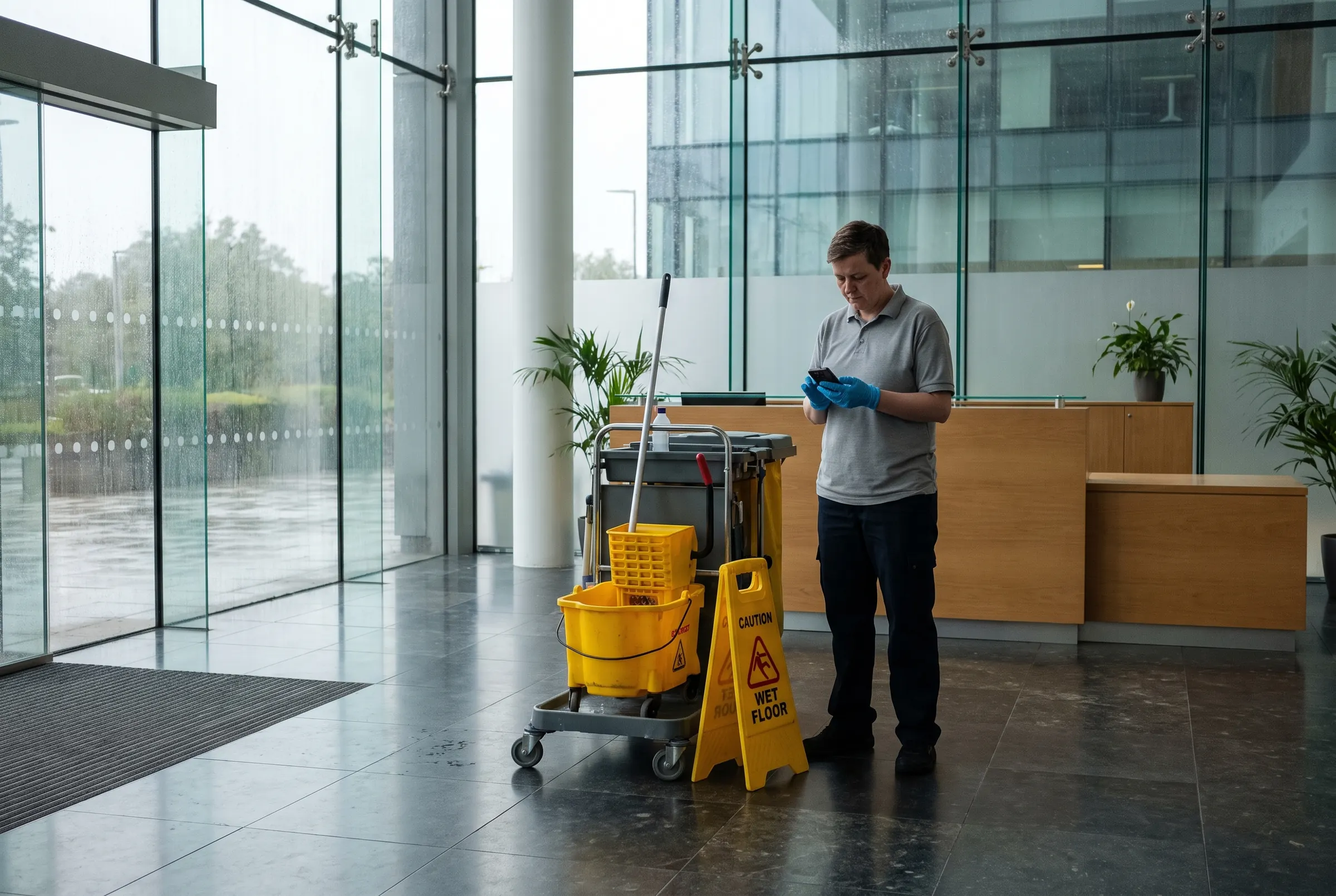
“Can you show COSHH and manual handling training for everyone on our contract?”
A client's facilities manager, at tender and again at the contract review
The tender asks it as a yes or no with a box to upload evidence. The contract review asks again, by name, for the people who are on the site.
What a cleaning firm gets asked, and by whom
Clients, at tender. They want proof of training, your COSHH assessments, your risk assessments and method statements and your insurance. Some ask for a certificate from a scheme such as CHAS or SafeContractor, whose shared criteria look for training that is in date.
The law. Under the Control of Substances Hazardous to Health Regulations 2002 (COSHH), anyone whose work may expose them to a hazardous substance must be given suitable and sufficient information, instruction and training. The assessment itself must be written down if you employ five or more people. A supplier's safety data sheet is something you read to make the assessment. It is not the assessment.
The shared building. Where two employers share a workplace, each must co-operate with the other on health and safety, and the client must give you information about the risks on their premises.
HSE lists the common risks in cleaning as slips and trips, contact dermatitis, musculoskeletal disorders and work at height.
Everyone on the books, whichever building they clean
Add each cleaner with a job title, start date, employment type and role. Part-time and temporary staff go on the same list. Put the contract in the job title or department ("Cleaner, Riverside House") and a search finds everyone on it. Each role lists the training it needs, so a new starter shows on the matrix as missing COSHH awareness and manual handling until they are done.
Client premises can be set up as areas of a site, which lets an incident report name the building. Staff, checks and talks are recorded against the site, not the area. If you want each contract as its own site instead, Standard has one site, Pro up to three and Business as many as you need. Compare the plans.
- Search by name, job title, role or department
- Leavers marked as left, with their training records kept
- Client premises set up as areas of your site

Briefings for a team that is never in one room
A cleaning team rarely meets. Record a briefing (a new descaler, a needle found in a bin, where the wet floor signs go) with its key points, and tick who should have it, by role if you like. As the supervisor gets round the buildings, each person is marked as having received it.
Until then they stay on the outstanding list, with the talk they missed and its date. It records attendance. It does not collect signatures.

Incident reports from a client's site, on the day
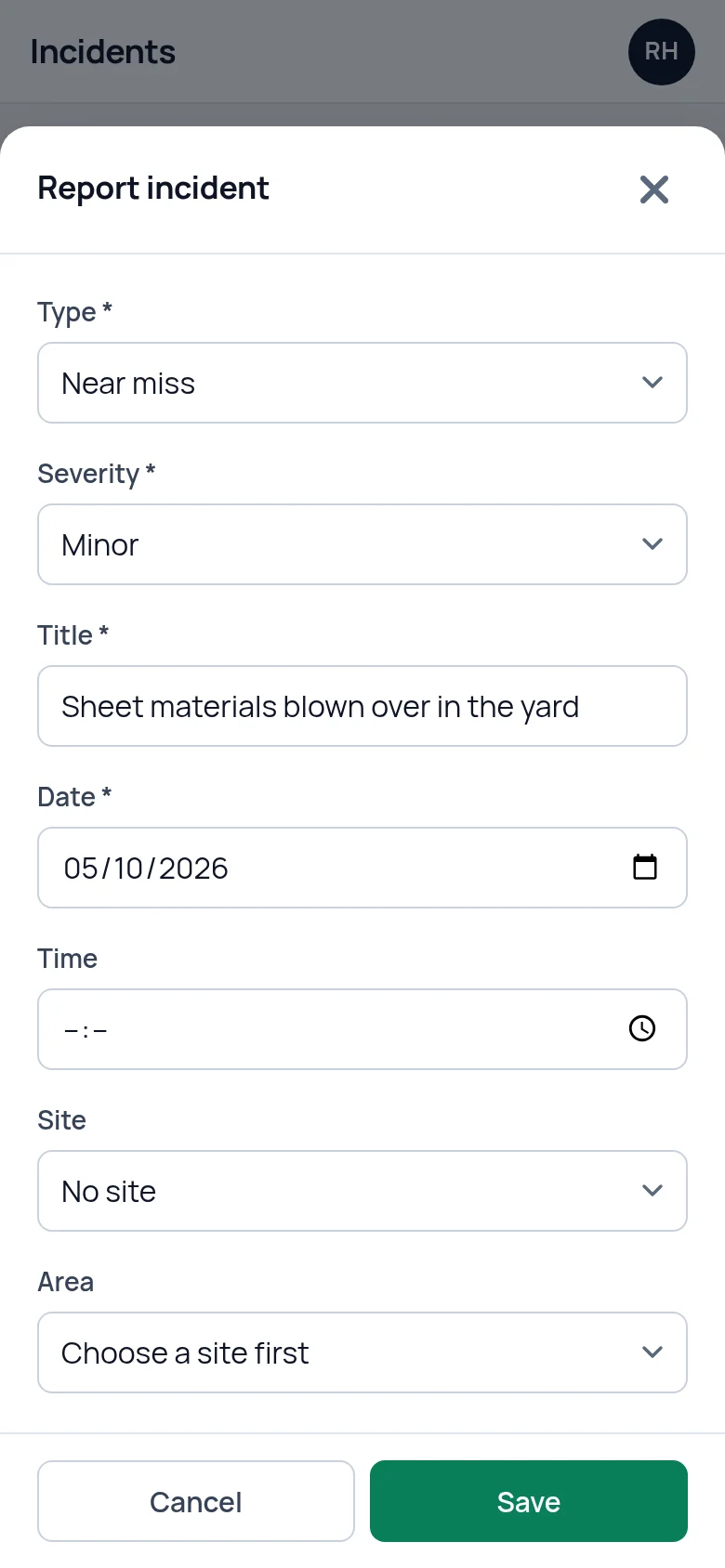
A slip on a wet floor, a splash of chemical in the eye, a needlestick emptying a bin, a strained back from a floor machine: the supervisor or manager reports it on a phone the same day. The report takes the type, the severity, the area and exactly where, what happened, who was hurt, the injury and treatment, witnesses and what was done straight away.
The injured person can be one of your staff or someone else, such as a client's employee who slipped where you had mopped. Each report stays open until you close it. Reporting under RIDDOR is still done on HSE's website.
How a cleaning or facilities firm uses each part
- Training matrixCOSHH awareness, manual handling, working at height for high-level cleaning and first aid against every cleaner and supervisor, with BICSc Licence to Practice if you use it.
- Document registerCOSHH assessments, the risk assessments and method statements for each contract, insurance and your scheme certificate, each with a review or expiry date. You write the assessments and upload them.
- Toolbox talksA briefing on a new product or a change at one building, with the list of who has had it and who the supervisor still has to catch.
- Incident reportingSlips, splashes, sharps and near misses from client sites, with the building recorded as the area and the exact spot written in.
- PPE stockGloves, goggles, aprons and safety shoes counted by item with a reorder level. Adjust the count when a box goes out to a site, with the reason.
- Inspections and checksA supervisor's site audit on your own checklist: store locked, bottles labelled, colour-coded cloths in use, signs out, machine cables undamaged.
Questions people ask
Do cleaners need COSHH training?
Yes, where their work may expose them to a substance hazardous to health. The COSHH Regulations require suitable and sufficient information, instruction and training. The law names no course and sets no expiry date, so you decide the content and the refresher period. HSE's advice is to keep basic training records.
Is a safety data sheet the same as a COSHH assessment?
No. HSE describes reading the product label and safety data sheet as a step in making the assessment. The assessment is your own judgement of how the product is used and how exposure is controlled. If you employ five or more people it must be recorded. SafetyPro360 does not write COSHH assessments. You upload yours as documents with a review date.
Who is responsible for a cleaner's safety on a client's premises?
You are, as the employer. The law also requires employers who share a workplace to co-operate with each other on health and safety, and requires the client to give you clear information about the risks on their premises and the precautions they have taken. Record what they tell you and brief your staff on it.
Can it cover staff across several client sites?
Yes. Client buildings can be added as areas of a site, and an incident report can then name the building. Training, checks and talks are recorded against the site, not the area. If you want each contract as a separate site, the plan decides how many you can have: Standard has one site, Pro up to three and Business has no limit.
Can cleaners report incidents themselves?
Not directly. Staff do not have logins of their own, so an incident is recorded by whoever is logged in to your account, usually the supervisor or manager, from a phone. The report names the injured person, the witnesses and the place.
Have the answer ready before anyone asks.
Add your people, the training each role needs and the documents you hold. From then on, what is overdue or missing is on one screen.
14 days free, then from £9.99 a month, with no card needed to start.